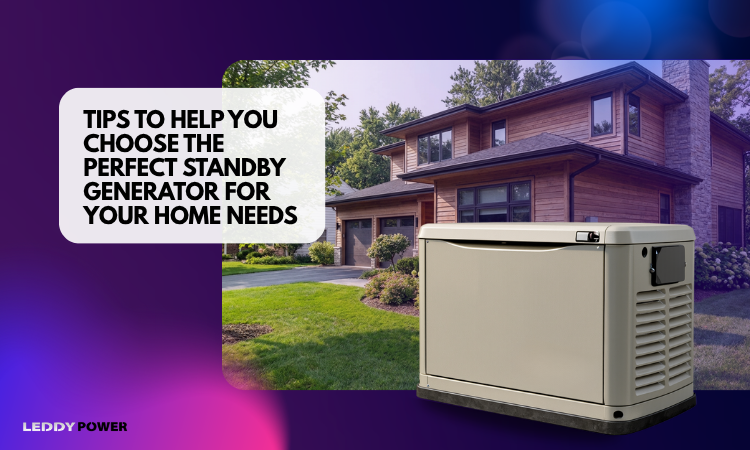
Power outages are an inconvenience for most households — but for some, they are a genuine emergency. Whether you rely on electrically powered medical equipment, work from home and cannot afford an unexpected loss of connectivity, or simply want to protect your home from the damage that power outages can cause to HVAC systems, refrigerated food, and sump pumps, a whole-home standby generator is one of the most valuable investments a homeowner can make. At Leddy Power Systems, Inc. in Moorpark, California, our team of generator specialists helps homeowners throughout Ventura County find and install the right standby generator for their specific needs. Here is what you need to know before you buy.
Understand the Difference Between Portable and Standby Generators
The first decision most homeowners face is whether a portable generator or a permanent standby generator best meets their needs. Portable generators are lower in cost upfront but require manual setup, extension cords, and a supply of fuel that must be purchased and stored. They cannot power an entire home, and running them requires someone to be present and attentive to refueling.
A whole-home standby generator, by contrast, is permanently installed outside the home and connected directly to both the electrical panel and a natural gas or propane supply line. When the utility power fails, the generator detects the outage within seconds and starts automatically — without any human intervention. Within 10 to 20 seconds, your home’s power is restored completely. When utility power returns, the generator shuts itself off and returns to standby mode. This automatic operation is what makes standby generators so valuable for overnight outages, extended absences from home, or situations where the homeowner is physically unable to operate a portable unit.
Sizing Your Standby Generator Correctly
Choosing the right generator size is the most critical decision in the buying process. An undersized generator cannot power all of your home’s critical systems simultaneously and may overload during heavy usage. An oversized generator wastes money both in purchase price and in ongoing maintenance costs.
Generator sizing starts with identifying which circuits and appliances you need to power during an outage. Essential circuits typically include the HVAC system (by far the largest single load in most homes), the refrigerator and freezer, well pump if applicable, lighting, and critical outlets for medical equipment, computers, and phone chargers. For whole-home coverage, add the dishwasher, washer/dryer, and any other major appliances.
Standby generators for residential use typically range from 10 kilowatts for essential-only coverage in smaller homes to 20 kilowatts and above for whole-home coverage in larger properties. At Leddy Power Systems, we perform a detailed load calculation for every installation to ensure the generator we recommend is properly sized for your home.
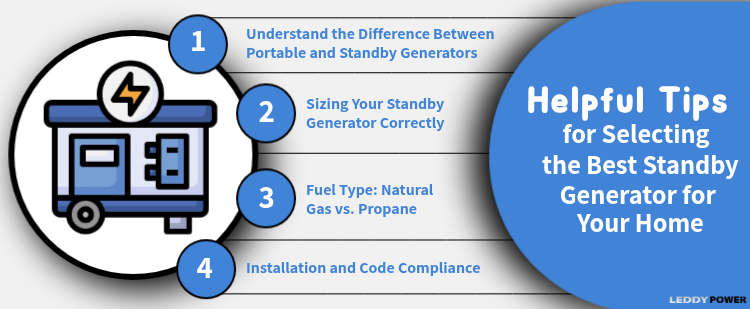
Fuel Type: Natural Gas vs. Propane
Most standby generators run on either natural gas or liquid propane. Natural gas is the most convenient option for homes with an existing gas service, as the generator connects directly to the utility gas supply and never requires refueling. Propane is an excellent alternative for homes without natural gas service — a properly sized propane tank provides fuel independence that is particularly valuable during extended outages when natural gas supply might also be affected by infrastructure damage.
Installation and Code Compliance
Standby generator installation is not a DIY project. It requires electrical permits, a natural gas or propane connection, proper grounding, transfer switch installation at the electrical panel, and adherence to local setback requirements that govern how close the generator can be placed to the home and property lines. Leddy Power Systems is a licensed contractor with full expertise in Ventura County permit requirements, ensuring every installation is code-compliant and properly inspected.
Choosing Leddy Power Systems for Your Generator Installation
Our team manages every aspect of the project — from the initial load calculation and generator selection through permitting, installation, and final commissioning. We service and maintain installed generators as well, with annual tune-up programs that keep your system ready to perform when you need it most.
Address: 5435 Atlantis Ct, Moorpark, CA 93021
Phone: (805) 552-4221
Website: leddypower.com
Frequently Asked Questions
Q: What size standby generator do I need for a 2,000 square foot home?
A: Size depends on your appliances and HVAC system, not just square footage. A typical 2,000 square foot home with central air conditioning generally requires a 14 to 18 kilowatt generator for whole-home coverage. Our load calculation process gives you an exact recommendation based on your specific home.
Q: How often does a standby generator need maintenance?
A: Most manufacturers recommend annual service that includes an oil and filter change, spark plug inspection, air filter replacement, and a system test. Generators that run exercise cycles weekly (as most standby units are programmed to do) stay in better condition than those that sit completely idle between outages.
Q: How long will a standby generator last?
A: A properly maintained standby generator from a quality manufacturer should last 20 to 30 years or more. The key factors are proper installation, correct sizing (avoiding overloading), and adherence to the annual maintenance schedule.
Q: Can a standby generator be installed if I have solar panels?
A: Yes, though the interaction between a generator and a solar inverter requires a specific configuration to prevent backfeeding. Leddy Power Systems has experience integrating standby generators with solar systems and will ensure the installation is safe and code-compliant.